
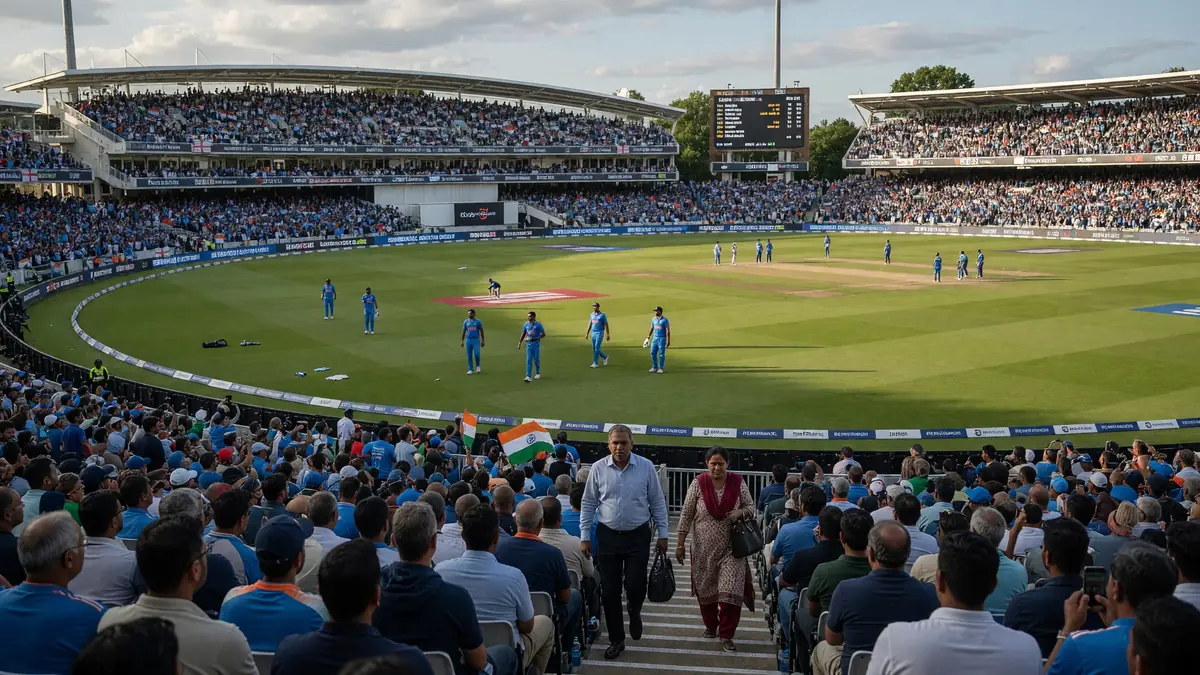
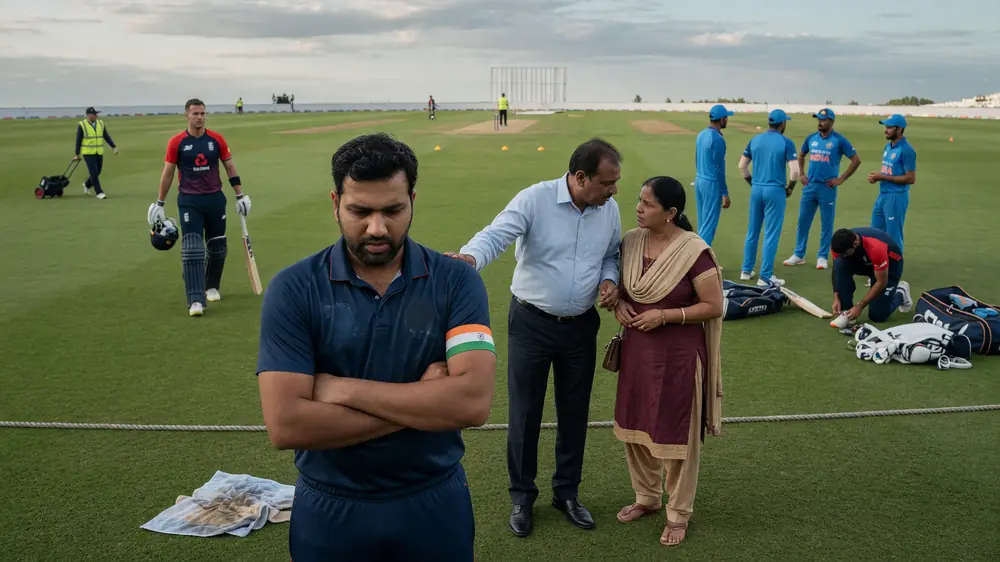
On 17 July 2026, Yahoo Sports carried a Cricket News piece bylined Soham Mukherjee under the headline that Rohit Sharma’s ODI retirement appeared to be moving from rumour toward practical reality. The hard detail that powered the story was personal rather than administrative: Gurunath Sharma and Purnima Sharma, the India captain’s parents, were reported to have reached, or to be arriving in, London ahead of the third ODI at Lord’s on 19 July.
That fixture mattered because the three-match series stood level. England had won the second ODI in Cardiff by four wickets, wiping out India’s earlier advantage and turning Sunday at the Home of Cricket into a genuine decider. Against that backdrop, family travel was read by several desks as more than a tourist itinerary.
What the mid-July reports actually established
The Yahoo Sports body stayed careful on certainty. It did not quote a BCCI press release ending Rohit’s ODI career. Instead it stacked three strands that, taken together, made the farewell reading hard to ignore for readers following the series.
CREX was cited for the claim that Rohit himself arranged the parents’ travel after learning how the selection committee viewed his longer-term place in the format. The same CREX line said the couple would be present at Lord’s for the final ODI of the series. Yahoo’s rewrite treated that sourcing as exclusive secondary reporting, not as an on-record quote from Rohit or the board.
For Indian readers tracking captaincy continuity, the distinction still mattered. A family visit can be private. A family visit after a reported selection briefing, during a series that already exposed batting friction, becomes a public narrative whether or not a statement follows.
Cardiff made the batting case harder to defend
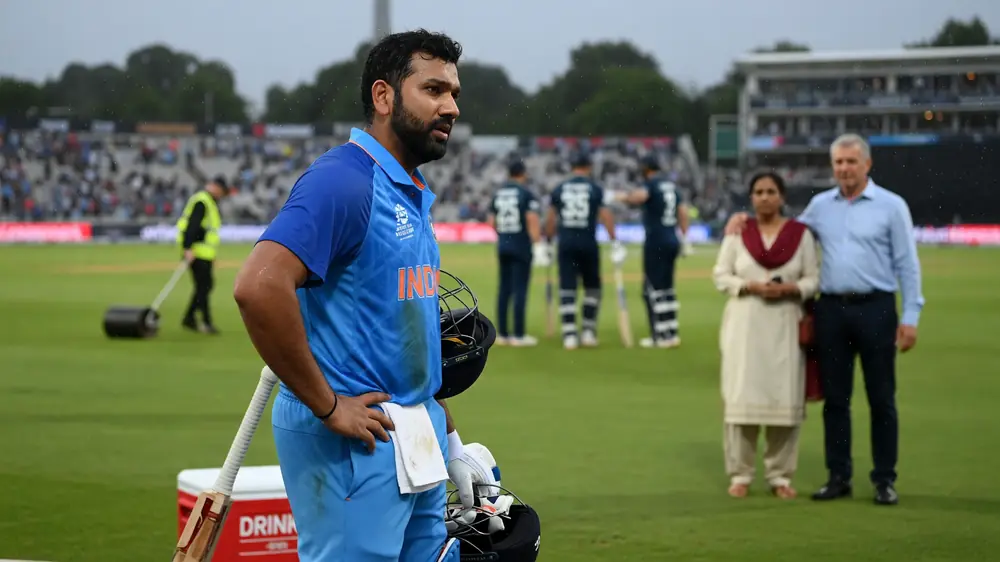
The second ODI in Cardiff supplied the on-field evidence the retirement speculation needed. England chased successfully and won by four wickets. Rohit’s own innings was described in tight, unflattering numbers: 10 off 18 in the Powerplay, a stretch of nine successive dots, and a final score of 26 off 47 after he was dismissed sweeping Will Jacks.
Those figures sat awkwardly beside the rest of India’s Powerplay. Teammates pushed the side to 61 for one in the same window while the captain could not free his arms. In white-ball cricket, slow starts at the top are not automatically fatal, but they become politically expensive when the surrounding conversation already questions longevity.
The calendar-year sample quoted in the same report was thin and cold: a single half-century and an average near 30.12 across eight matches before the England assignment fully unfolded. That is not a full-career verdict. It is, however, the kind of recent strip selectors use when they argue for accelerated turnover.
Selectors, Gambhir, and the Jaiswal pathway
According to the July report, the selection panel and head coach Gautam Gambhir sat with Rohit the previous week to outline long-term ODI planning. Management was described as leaning toward younger talent. Yashasvi Jaiswal was named as the batter tipped for a larger one-day role if the opening berth were rebuilt.
None of that language equals a signed succession plan. It does explain why the London family arrival landed with force. If the captain had already heard that the system wanted a younger spine, inviting parents for a possible last away ODI becomes legible even without a microphone quote.
Jaiswal’s name also clarified the tactical preference. India’s white-ball hierarchy had spent seasons balancing experience at the top with left-hand power and strike-rate upside. Elevating Jaiswal in ODIs would not merely replace a veteran; it would re-weight the first ten overs toward a different risk profile.
Why Lord’s carried symbolic weight
Lord’s is not just another English ground on the touring calendar. For visiting India sides it has long doubled as a stage where careers are framed in memory as much as in scorecards. The July report leaned on that symbolism without needing extra embroidery: a level series, a Sunday decider, parents in the stands, and a captain already briefed on the road ahead.
Still, symbolism is not confirmation. A retrospective written weeks later has to keep the boundary clear. As of the 17 July article, there was no published BCCI note declaring the Lord’s ODI as Rohit’s final one-day appearance. There was reported family travel, reported selection messaging, a documented lean patch, and a match that closed the series window.
Readers who want the wider match-week paper trail can return to the site’s ongoing cricket news desk for related India coverage filed around the same summer window. That single trail is enough; the facts of this retrospective stay locked to the Yahoo Sports record from 17 July.
How the report handled certainty
Professional desks often fail retirement stories by converting atmosphere into announcement. The Yahoo Sports rewrite mostly avoided that trap. Verbs stayed hedged: “appears,” “reportedly,” “tipped,” “understood.” The strongest concrete claims were travel logistics, the Cardiff scoreline, the dismissal mode against Jacks, and the existence of a selection conversation the previous week.
That hierarchy is useful for later readers. If an official farewell had already been issued, the article would have led with the board line. Because it led with parents in London, the correct historical reading is speculation reinforced by circumstance, not a closed administrative fact.
The CREX quotation embedded in the Yahoo piece claimed the parents had already reached London and would watch the final ODI at Lord’s. Even there, the authority was “exclusive sources,” not a named official. Secondary sourcing can be directionally right and still leave room for itinerary changes, private family reasons, or a captain who continues beyond one fixture.
Form, role, and the cost of a slow Powerplay
Rohit’s white-ball value for India has long rested on two jobs at once: set a tempo others can trust, and absorb early movement without freezing the innings. The Cardiff sequence described in the report — ten off eighteen, then nine dots — failed both jobs in public view. When the rest of the top order still cleared sixty in the Powerplay, the innings became a study in isolation rather than collective collapse.
Selectors rarely discard captains after a single ugly chart. They do, however, keep cumulative ledgers. An average near thirty across eight calendar-year ODIs, with only one fifty, is the sort of ledger that makes a younger alternative politically easier to defend inside the room Gambhir and the panel were said to have held.
The sweep dismissal to Will Jacks also carried a stylistic sting. Jacks is not a classic new-ball destroyer; he is a part-time off-spin option who becomes dangerous when batters manufacture risk against lesser pace. Falling that way in a series decider week is the sort of mode dismissal opponents clip into montage packages.
What the episode still means for fantasy and squad reading
GameOn11 readers did not need a formal retirement note to adjust risk models in July. Captain contingency planning already changes when a senior opener’s minutes look finite and a name like Jaiswal is publicly linked to the same slot. Ownership, captaincy upside, and series-long specials all reprice on expectation, not on stamped paperwork.
The practical checklist from the July file remains simple. First, separate family travel reports from board communiqués. Second, weight recent ball-by-ball evidence — Powerplay output, dismissal mode, series state — higher than career folklore. Third, track whether the younger alternative actually receives the expanded role the rumour ecology promised.
Those three checks still organise any later reread of the Lord’s week. They also keep the retrospective honest: the story’s power came from converging signals, not from a single definitive sentence.
Legacy reading without rewriting the tape
By early August 2026, the July report sits as a primary document of how the rumour cycle looked on the eve of the Lord’s decider. It captured a captain under form pressure, a level series, a named succession candidate, a coach-and-panel briefing, and parents flying into the match city. That constellation is why the piece travelled beyond a routine preview note.
What it cannot do is stand in for outcomes that were not in the source. It cannot invent a dressing-room speech, a final over sequence at Lord’s, or an official retirement graphic. Those belong to whatever was later confirmed on the record. The responsible archival move is to freeze the 17 July facts and let later documents carry later claims.
In that narrower sense, the mid-July file still earns its place in India’s white-ball timeline. It marks the moment public reporting treated Rohit’s ODI future as an active management question rather than a distant off-season debate — and it did so with parents, selectors, Cardiff numbers, and Lord’s on the same page.
Source basis: Yahoo Sports syndication published 17 July 2026 (06:24 UTC), bylined Soham Mukherjee, originally appearing on Cricket News; secondary CREX attribution inside that article for the parents’ travel claim. Retrospective synthesis only — no additional outlets aggregated.